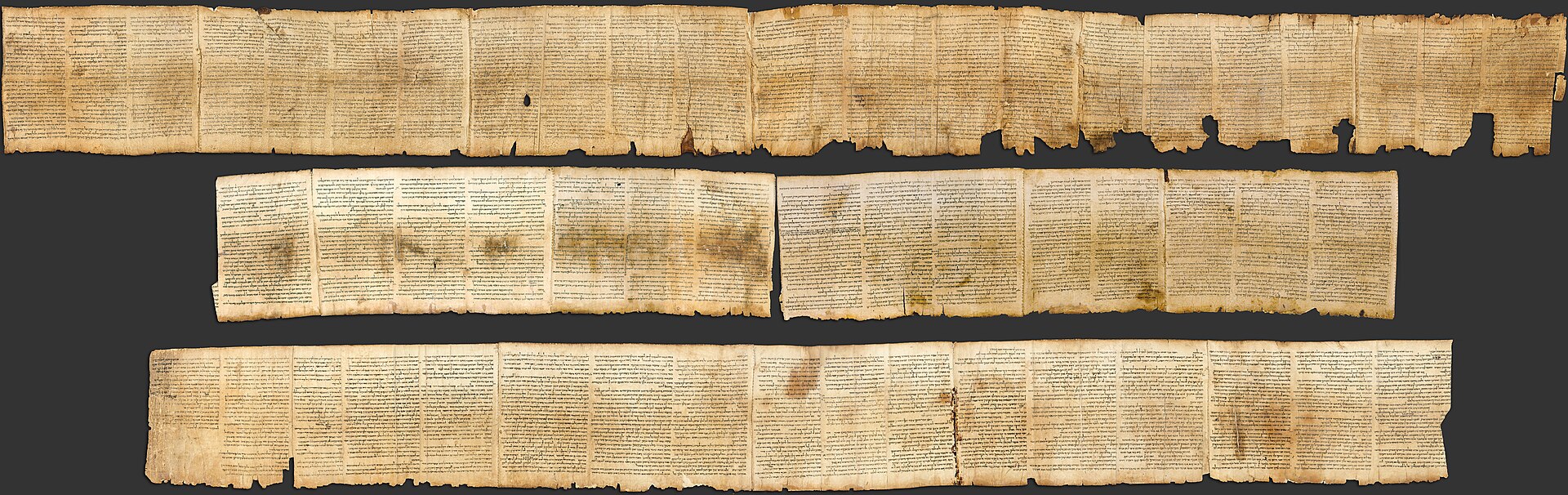
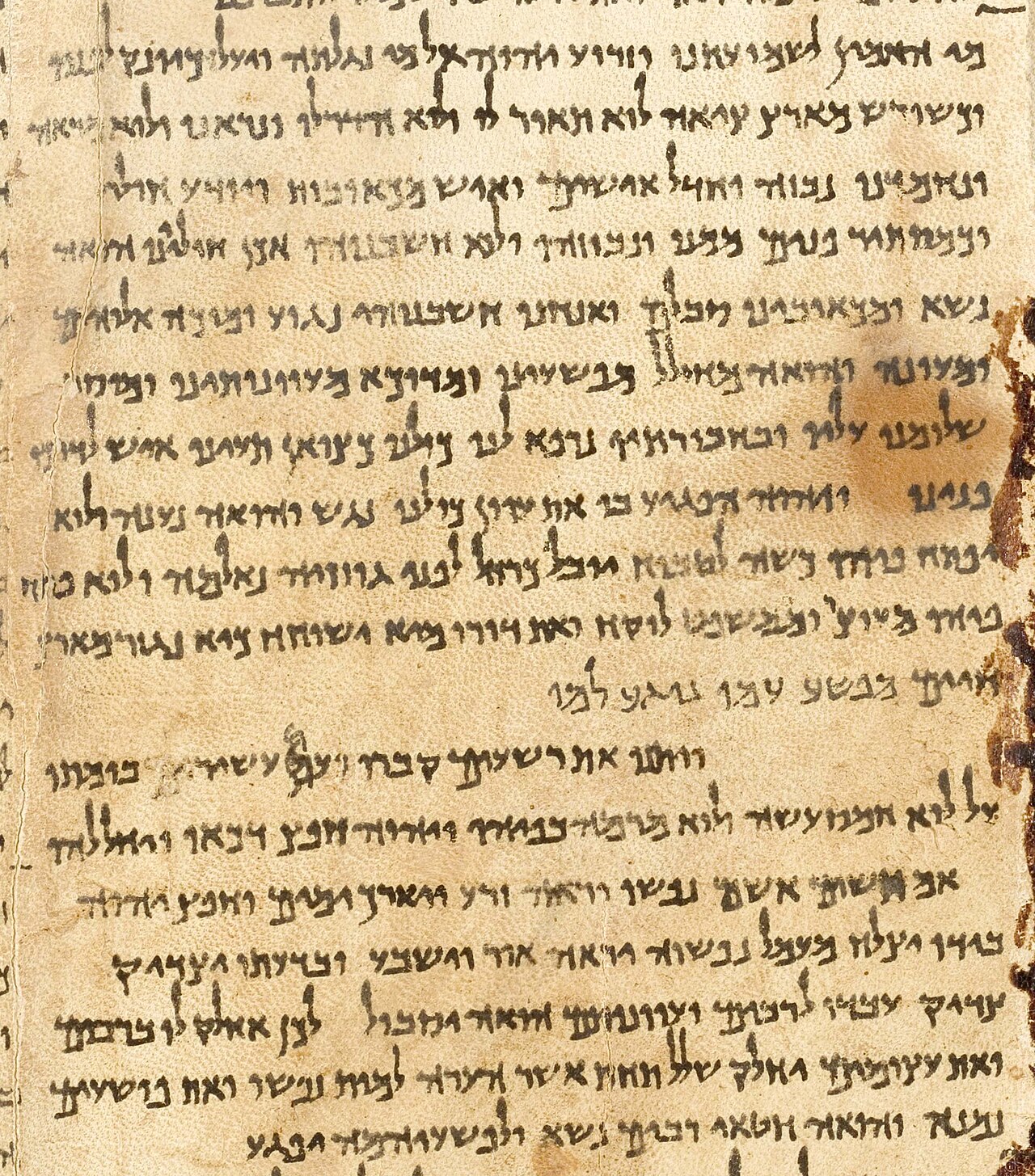
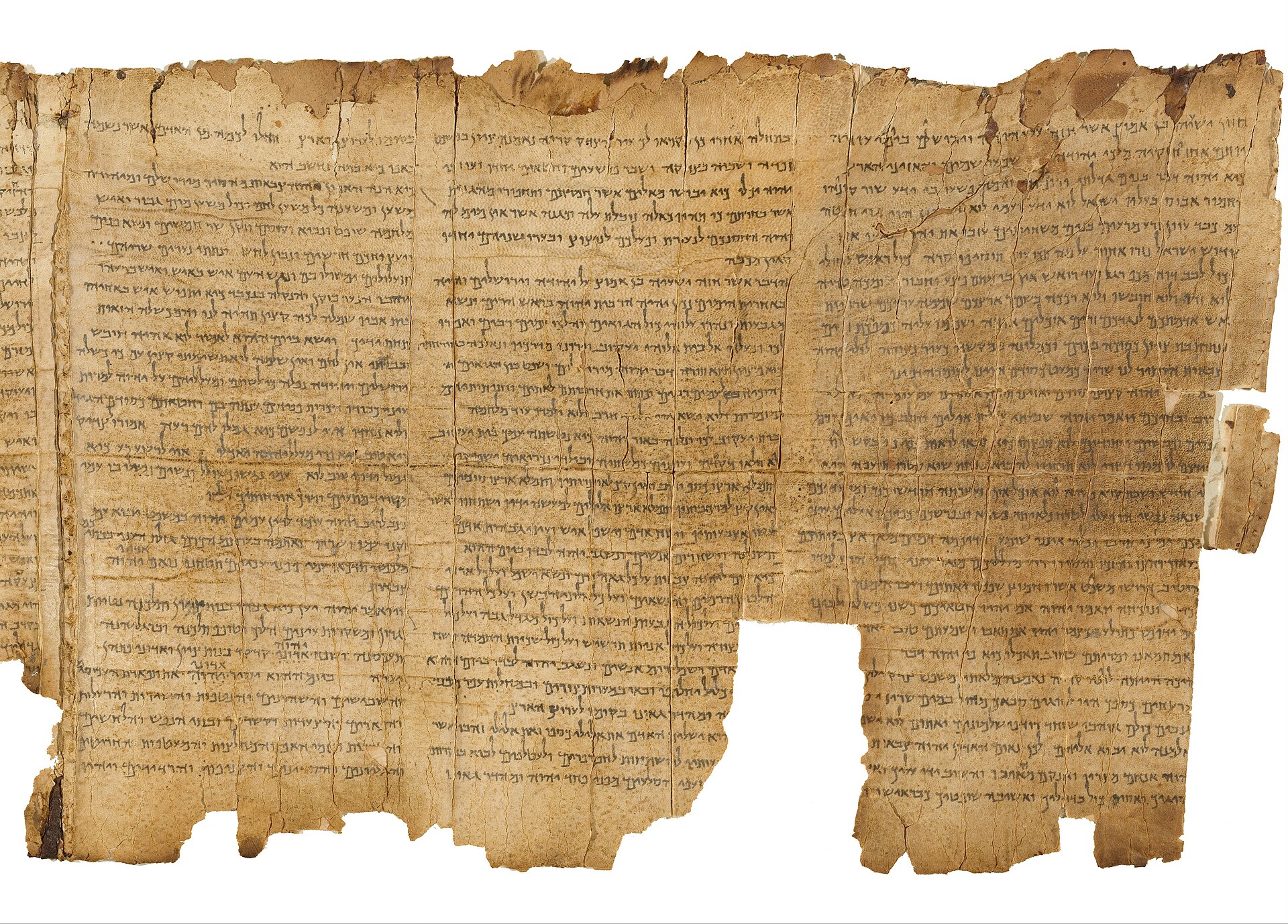
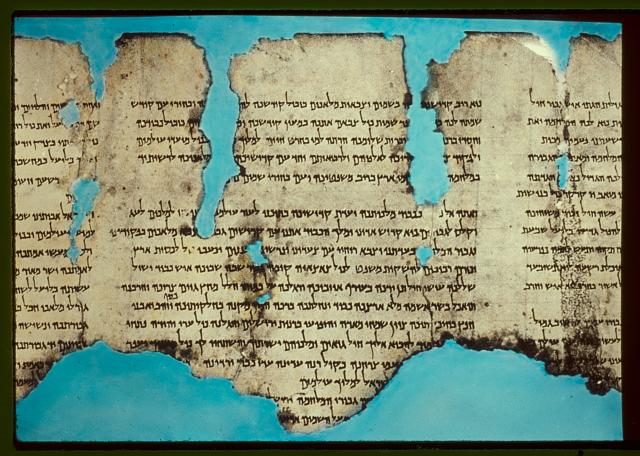
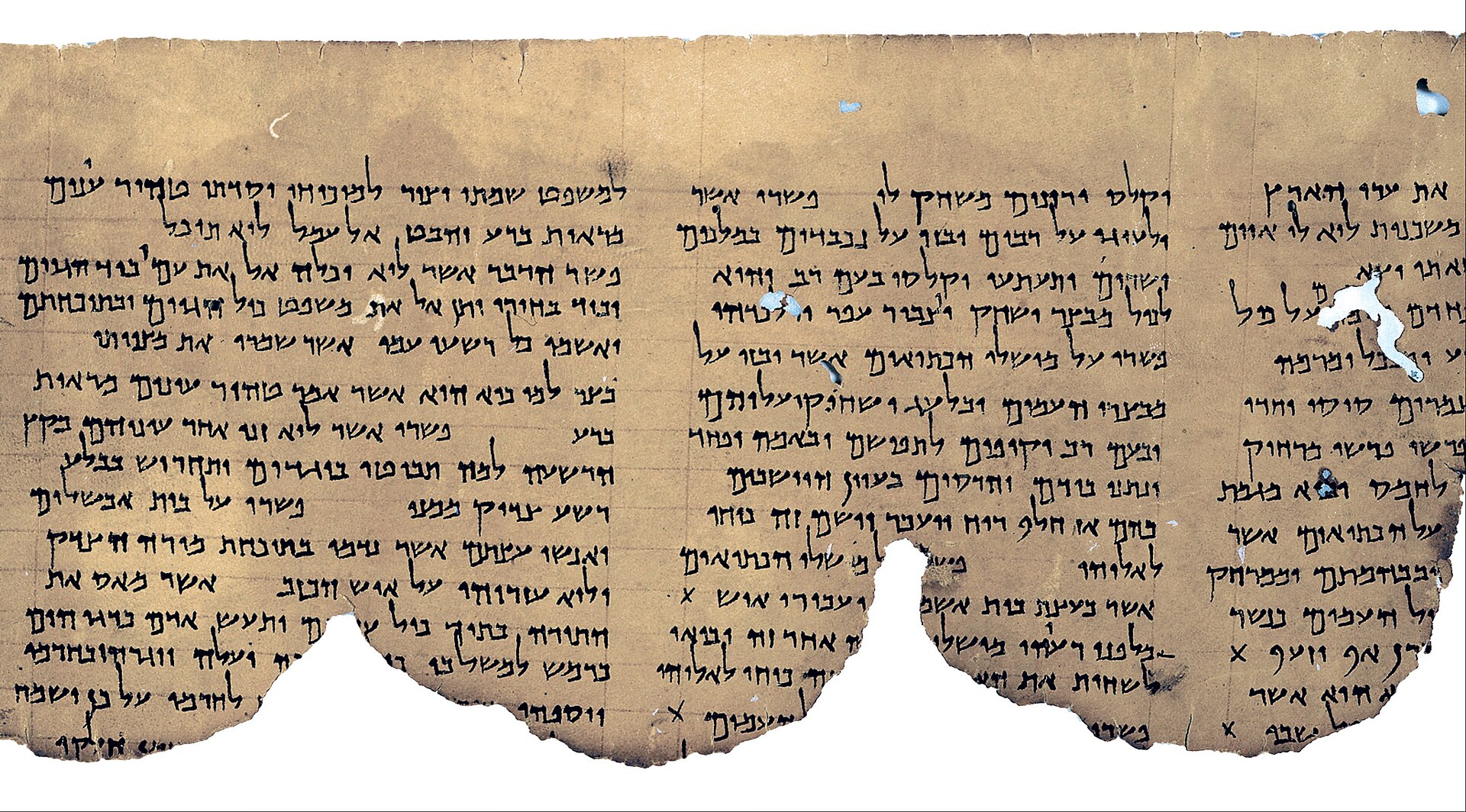
The community’s own books, and older books the Hebrew Bible later left out. Photographs, not a copyrighted English.
4Q427 · Cave 4
Thanksgiving Hymns
Poems of thanks, often in the voice of a teacher. Called the Hodayot. The English is still copyrighted.
1Q20 · Cave 1 · Aramaic
Genesis Apocryphon
Stories grown out of Genesis, including Abram and Sarai. One of the first seven scrolls. The English is still copyrighted.
4Q252 · Cave 4
Commentary on Genesis
Selected stories from Genesis, with notes. Not a full second Genesis.
4Q266 · Cave 4, and the Cairo Geniza
Damascus Document
A rule and a history of a community that left the land of Judah for the land of Damascus.
1Q28a · Cave 1
Rule of the Congregation
The order of the assembly in the last days, including women and children. Copied with the Community Rule.
3Q15 · Cave 3 · copper, not skin
Copper Scroll
A list of hiding places for gold, silver, and vessels. It is the only scroll beaten into copper. The English is still copyrighted.
4Q397 · Cave 4
Some Works of the Law
A letter about what separates the community from the Jerusalem priesthood. Scholars connect its phrase “works of the law” with Paul.
4Q401 · Cave 4, Cave 11, and Masada
Songs of the Sabbath Sacrifice
Songs for the sabbaths of the first quarter, describing angelic worship.
11Q5 · Cave 11
Great Psalms Scroll
Most of the last third of the Psalms, plus pieces not in the later Hebrew Bible, including a hymn to Zion.
1Q23 · Several caves · Aramaic
Book of Giants
A story of the giants, beside the Book of the Watchers. 1 Enoch, which the caves also copied, is already on the shelf.
4Q216 · Caves 1, 2, 3, 4, and 11
Jubilees
Many copies of Jubilees were in the caves. The book retells Genesis and Exodus in jubilee weeks. Charles’s English, 1917, is on the shelf to read.
4Q201 · Cave 4 · Aramaic
1 Enoch, in the caves
The caves held Aramaic copies of Enoch centuries before the Ethiopic Bible. The English on this shelf is Charles, 1917.
4Q196 · Cave 4 · Aramaic and Hebrew
Tobit
Several copies. Tobit is in the Catholic and Orthodox Bibles, not the Protestant one used on the main shelf.
2Q18 · Cave 2, and Masada
Ben Sira
Hebrew of the Wisdom of Sirach, a book the later Hebrew Bible left out and the Greek Bible kept.
11Q18 · Several caves · Aramaic
New Jerusalem
A guided walk through a measured, ideal city. Read it beside the city in Revelation. The English of the scroll is still copyrighted.
4Q246 · Cave 4 · Aramaic
Son of God text
A short, broken text. Someone is called son of God and son of the Most High. Scholars argue who is meant.
4Q521 · Cave 4
Messianic apocalypse
A hope that the messiah’s time brings good news to the poor and the dead raised. Luke 7 stands beside it.
11Q13 · Cave 11
Melchizedek
Melchizedek at the end of days, releasing captives in a jubilee. The English is still copyrighted.
4Q175 · Cave 4
Testimonia
A single sheet of verses set in a row: Moses, a prophet, a priest, and a blessing. A chain of scripture, not a new book.
4Q174 · Cave 4
A commentary on the last days
Scripture quoted, then applied to the community’s hope. Sometimes called the Florilegium.
4Q169 · Cave 4
Nahum commentary
Nahum explained as the community’s own century, including names of rulers.
4Q161 · Cave 4
Isaiah commentary
Pieces of Isaiah, then what the community believed they meant.
4Q166 · Cave 4
Hosea commentary
Hosea quoted, then applied to the community.
4Q171 · Cave 4
Psalms commentary
Selected psalms, explained as the story of the Teacher and his enemies.
4Q415 · Cave 4, and Cave 1
Instruction
Wisdom for a student, including the “mystery of what is to be.” The English is still copyrighted.
4Q504 · Cave 4
Words of the Luminaries
Prayers for the days of the week, remembering the wilderness.
4Q525 · Cave 4
Beatitudes
A wisdom poem of “blessed is…” lines. Read beside Matthew 5. It is not the Sermon on the Mount.
4Q434 · Cave 4
Bless, my soul
Hymns that open “Bless the Lord, O my soul.” Called Barkhi Nafshi.
1Q27 · Cave 1
Mysteries
A broken wisdom text about what the wicked do not know.
4Q242 · Cave 4 · Aramaic
Prayer of Nabonidus
A king of Babylon, ill for seven years, and a Jewish diviner. Read beside Daniel 4. The English is still copyrighted.
4Q543 · Cave 4 · Aramaic
Visions of Amram
The father of Moses sees two angels who contend for him.
4Q541 · Cave 4 · Aramaic
A priestly vision
A figure, often read as a priest, who atones and is opposed. Called the Apocryphon of Levi.
4Q320 · Cave 4
The priestly calendar
A 364-day year and the turns of the priestly courses. Called Mishmarot.
1Q34 · Cave 1
Festival prayers
Prayers appointed to the festivals.
8Hev1 · Nahal Hever, not a Qumran cave
Greek Minor Prophets
A Greek scroll of the Twelve, found farther south. The Leon Levy library includes it with the Judean Desert finds.
4Q119–122 · Cave 4
Greek Torah fragments
Small Greek copies of Leviticus, Numbers, and Deuteronomy. The Septuagint, in scraps.