The pictures in the chapters are art. These are finds from the ground: a blessing, a tunnel, a king’s name. Each one is set beside a passage it touches.
A stone can confirm a name or a siege. It is not the Holy Bible, and it does not prove every line. What is uncertain is said here to be uncertain.
About 600 BC · Ketef Hinnom, Jerusalem
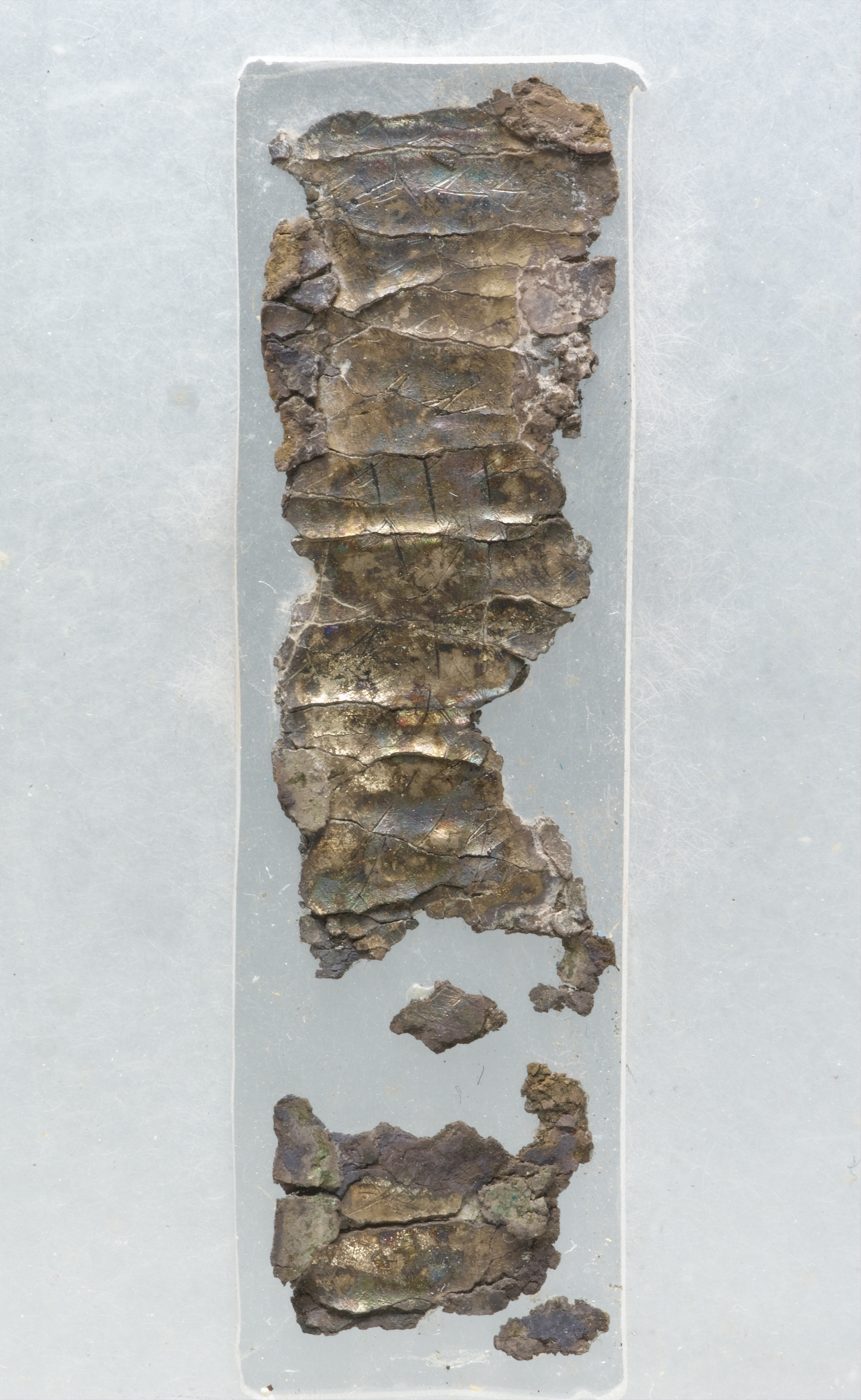
The silver blessing
Two tiny silver scrolls, worn as amulets, carry the priestly blessing: the LORD bless you and keep you. They are the oldest words of the Bible yet found written down.
They show the blessing was already being worn in Jerusalem before the exile. They are not a whole book of Numbers.
Photograph: public domain, via Wikimedia Commons.
Reference. Israel Museum, Jerusalem. Found at Ketef Hinnom in 1979. The words are the blessing in Numbers 6:24–26.
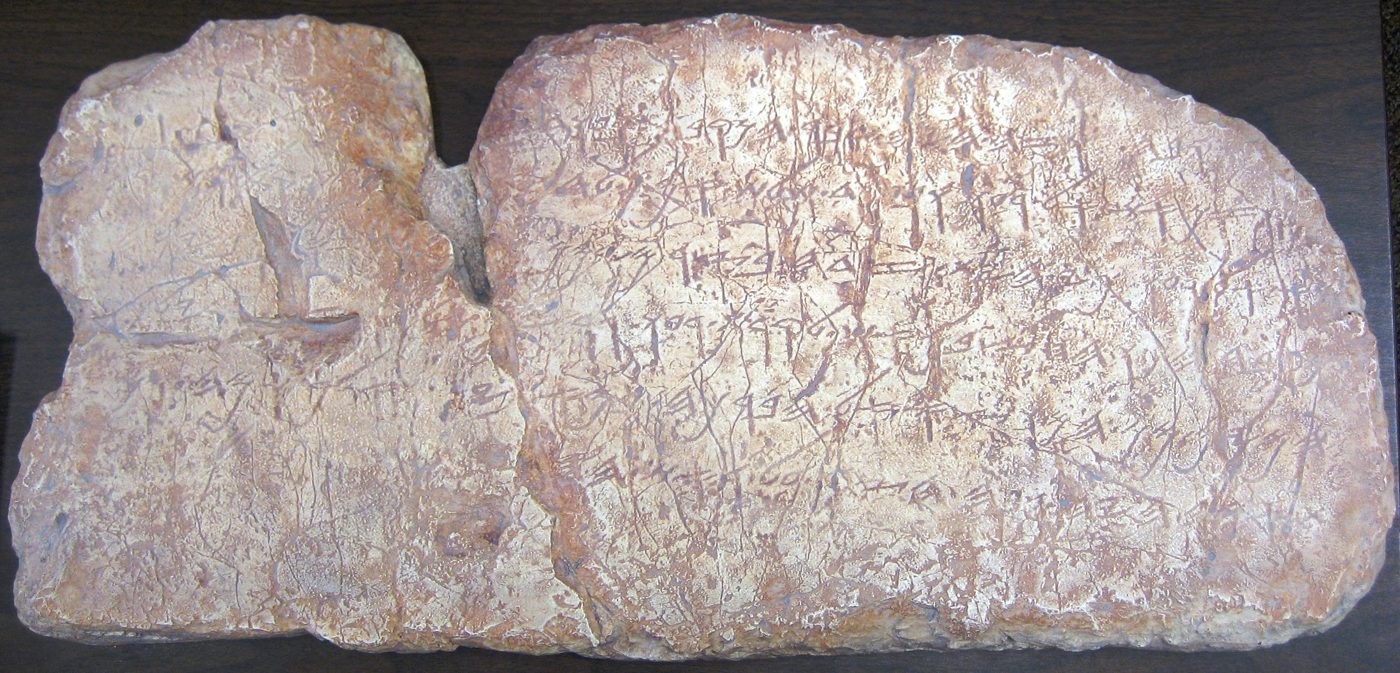
Workmen cut a Hebrew notice in the rock where the two digging teams met. It tells how they heard each other through the stone and the water flowed. The Bible says Hezekiah made the conduit and brought the water into the city.
The notice does not name Hezekiah. The tunnel, the date, and the Bible’s account of his waterworks are what join them.
Photograph: public domain, via Wikimedia Commons.
Reference. Istanbul Archaeology Museums. Cut in the rock of the tunnel. Set beside 2 Kings 20:20.
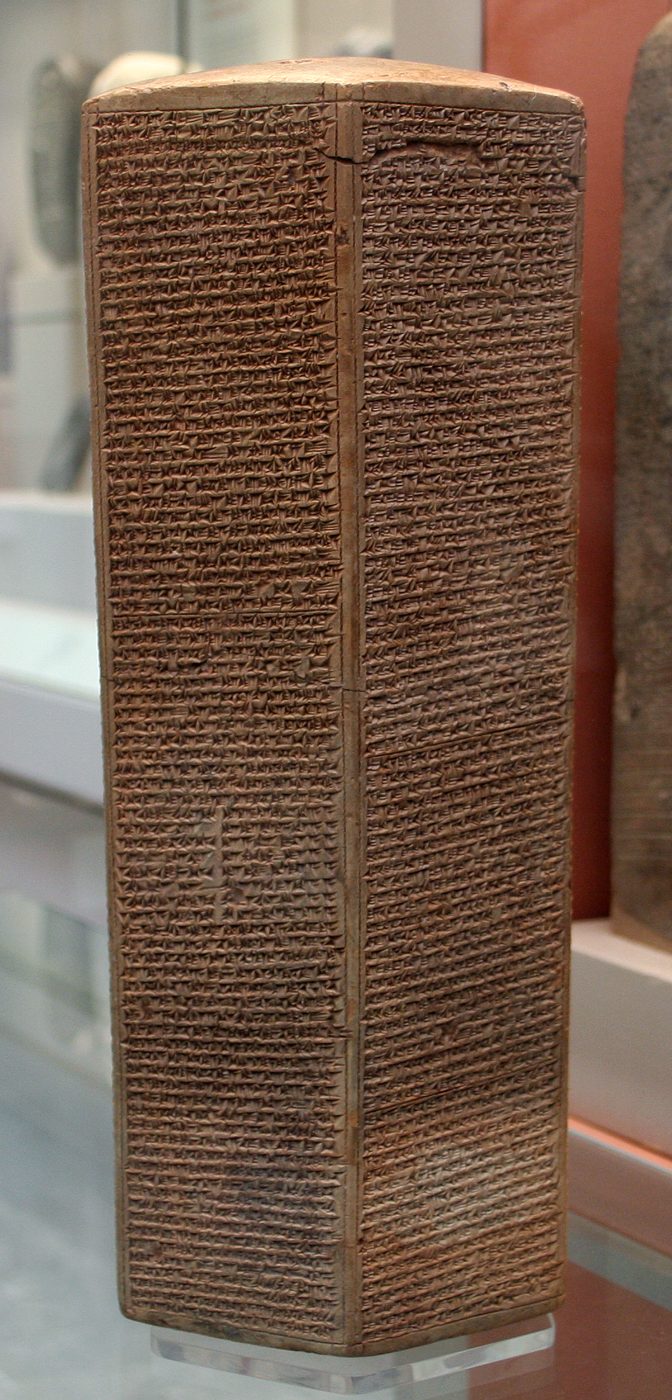
Sennacherib’s clay prism says he shut Hezekiah the Judean in Jerusalem like a bird in a cage, and that Hezekiah sent tribute. The Bible also says Hezekiah paid tribute, and that the city was not taken.
The prism does not mention an angel or a plague. It also never says the city fell. The two accounts meet on the siege and the tribute, and they both leave Jerusalem standing.
Photograph: public domain, via Wikimedia Commons.
Reference. British Museum, the Taylor Prism. Sennacherib’s own account of the siege. Set beside 2 Kings 18–19.
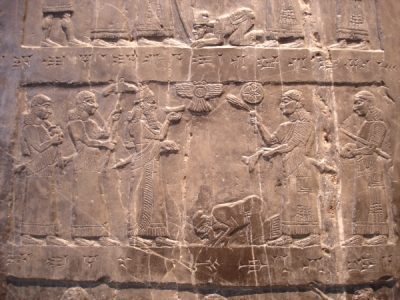
A panel on Shalmaneser’s obelisk labels a kneeling king “Jehu of the house of Omri” and shows him bringing tribute. The Bible’s Jehu is the king who ended Omri’s line.
Assyria used “house of Omri” as a name for Israel. It is not a claim that Jehu was Omri’s son. The picture is the king, the tribute, and the name.
Photograph: public domain, via Wikimedia Commons.
Reference. British Museum, the Black Obelisk of Shalmaneser III. Set beside 2 Kings 9–10.
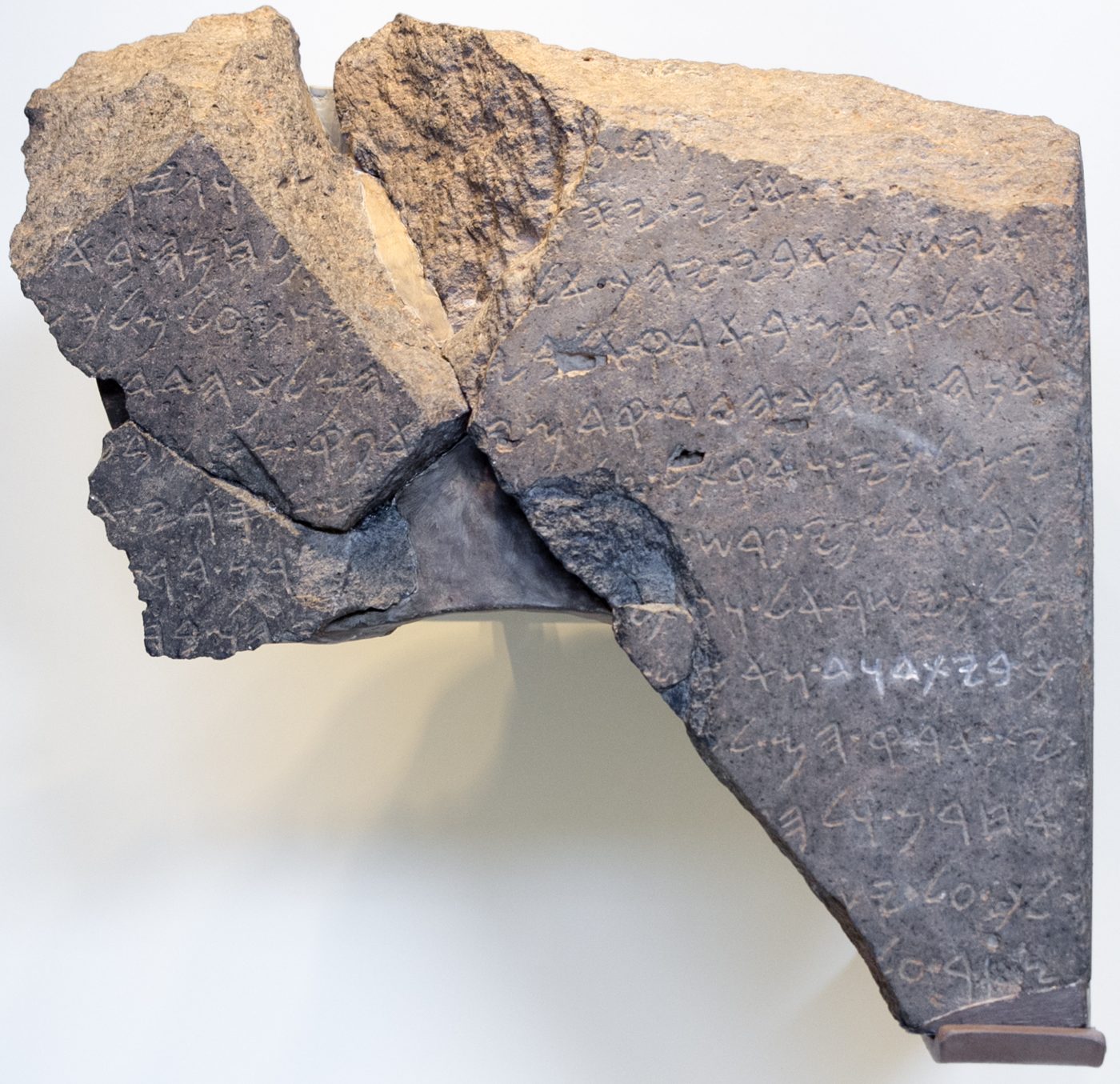
An Aramean king boasts, in Aramaic, that he killed a king of the house of David. It is the oldest widely accepted mention of David outside the Bible.
A few letters are worn. “House of David” is the reading most scholars accept, not a line that every scholar reads the same way. The stone is later than David. It names his house.
Photograph by Oren Rozen, CC BY-SA 4.0, via Wikimedia Commons.
Reference. Israel Museum. Found at Tel Dan. The oldest widely accepted mention of the house of David outside the Bible. Set beside 2 Samuel 7.
First century · Caesarea, now in the Israel Museum
Pontius Pilate
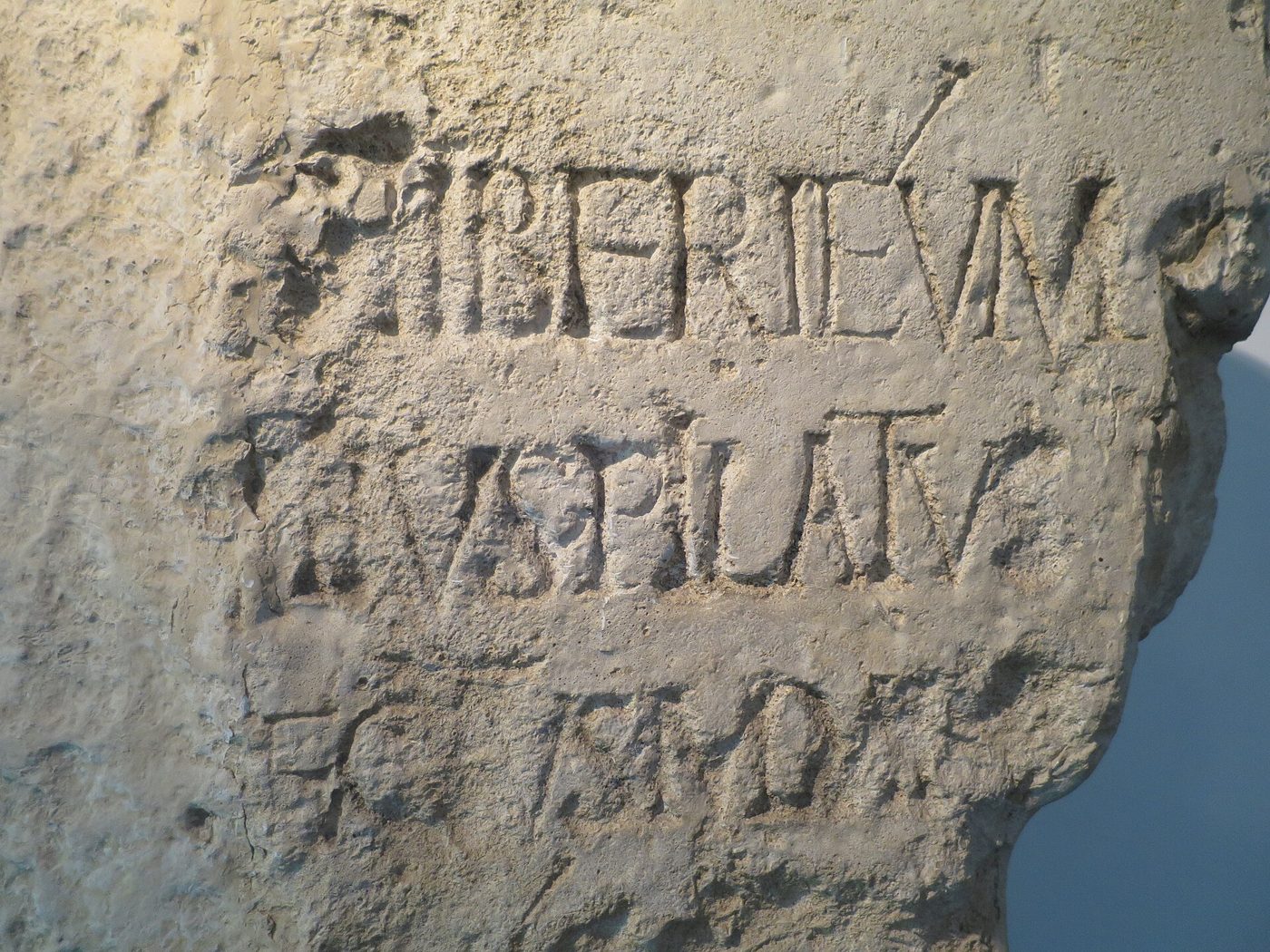
A Latin stone from the theater at Caesarea names Pontius Pilate, prefect of Judea, and a building he dedicated to Tiberius. The Gospels and Luke’s opening put the same man over the trial of Jesus.
The stone does not mention Jesus. It fixes Pilate’s name, his title, and his province. This picture is a copy, not the original.
Photograph of a copy, CC BY 4.0, via Wikimedia Commons. The original is in the Israel Museum.
Reference. The original was found at Caesarea and is kept at the Israel Museum. This picture is a copy in Milan, so the letters can be seen. Set beside Luke 3:1.
About 592 BC · Babylon, now in the Pergamon Museum
Jehoiachin’s rations
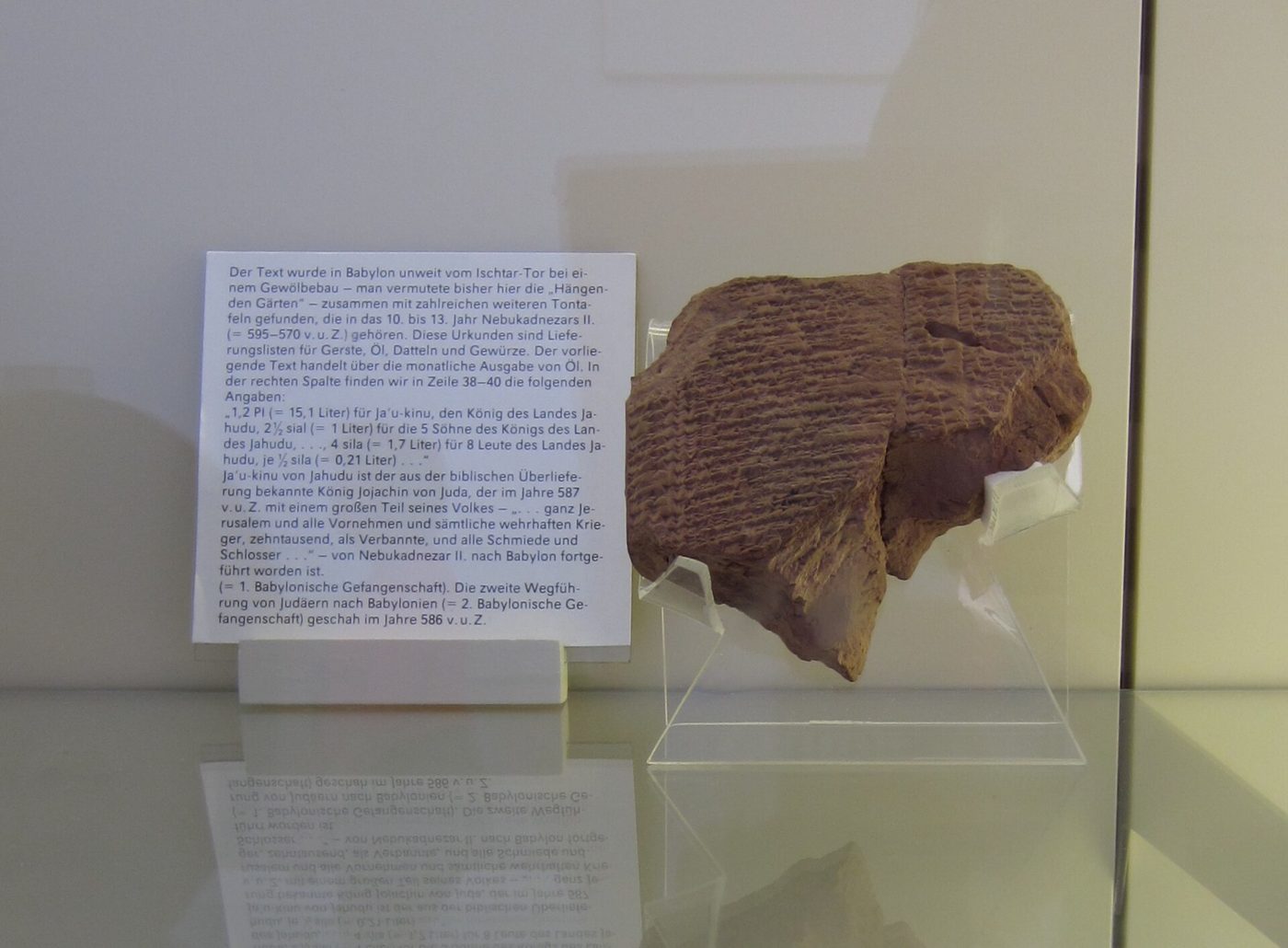
Babylonian clerks listed oil for “Ya’u-kinu, king of the land of Yahudu,” and for his sons. That is Jehoiachin of Judah, the king the Bible says was taken to Babylon and later given a seat and a daily portion.
The tablets are a pantry list, not a theology. They show the exiled king was still called king, and was fed from the palace.
Photograph by Scallaham, CC BY-SA 4.0, via Wikimedia Commons.
Reference. Vorderasiatisches Museum, Berlin. Palace records from Babylon. Set beside 2 Kings 25:27–30.
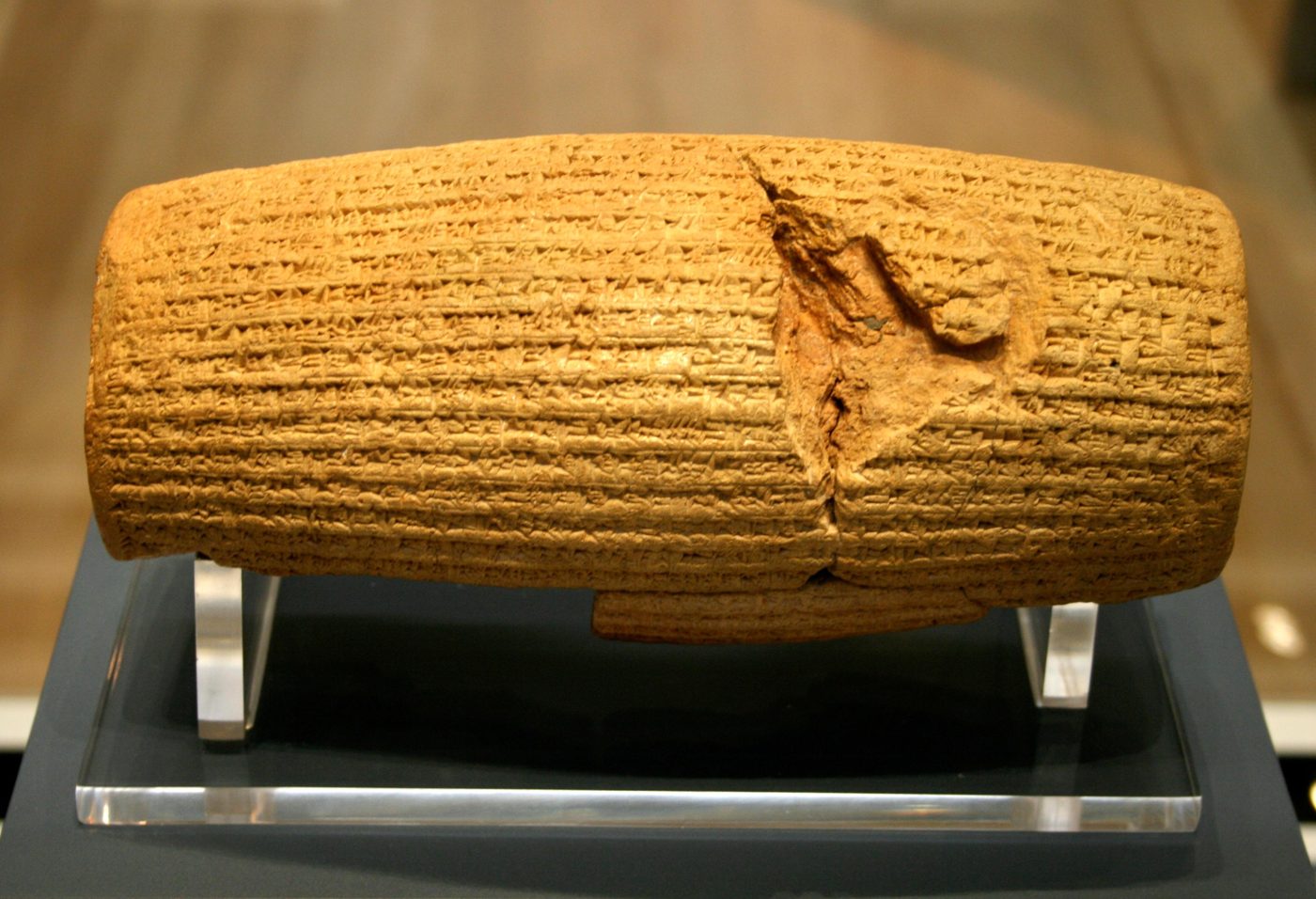
The Cyrus Cylinder is the king’s own account of sending displaced peoples home and telling them to rebuild the temples of their gods. Ezra says Cyrus made a decree for the Jews to return and rebuild the house of the LORD.
The cylinder does not name Jerusalem, Judah, or the LORD. It is the policy. Ezra is the decree for Israel. They are kin, not the same document.
Photograph by Mike Peel, CC BY-SA 4.0, via Wikimedia Commons.
Reference. British Museum. Cyrus’s own account of sending displaced peoples home. Set beside Ezra 1, and not the same document as Ezra’s decree.